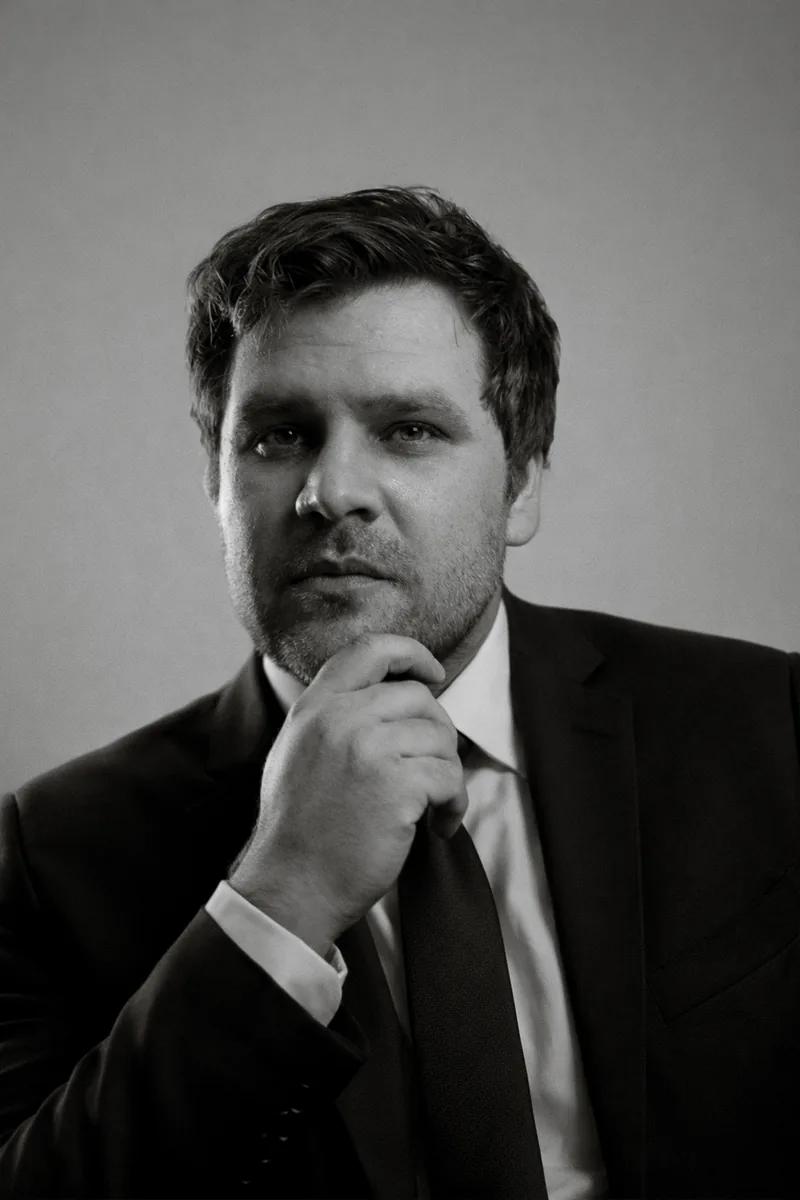
Vienna photographer websites tend to share the same pattern: beautiful images, thin text, a contact page — and zero visibility in Google. The diagnosis is rarely the content. It's what sits underneath: heavy images, missing structured data, no local setup. Rather than explain that on a client project, I document it publicly on my own — bestalexshots.com. That site is photography and videography for Vienna (real estate, corporate, events) and at the same time my running SEO sandbox.
TL;DR — what Vienna photographers need for SEO in 2026
- Image optimization isn't optional. Hero images under 200 KB, modern WebP/AVIF, explicit width/height. LCP target: under 2.0s.
- ImageObject schema with license, creator, and contentLocation is visibly rewarded in image search and AI Overviews in 2026.
- Local SEO often outweighs classic on-page SEO for "photographer Vienna" queries. Google Business Profile, reviews, NAP consistency.
- Multilingual setup: hreflang clean per page, no generic fallback, x-default explicit. With three languages, this becomes an error-prone surface fast.
- Content depth per service: one URL per photography area (real estate, corporate, events) — don't shove everything into a portfolio gallery.
bestalexshots.com — the setup
The site runs on Eleventy — a static site generator that needs no server, no CMS, no database. That's the most honest architecture for a photography website in 2026: no plugin conflicts, no updates, no WordPress bloat. HTML files come in at 30–50 KB, CSS under 40 KB, JavaScript only where it actually earns its weight.
Three language versions are maintained — English as primary (international clientele in Vienna), German for the local market, Ukrainian as a third for the Ukrainian community in Vienna. hreflang annotations are generated per page with explicit x-default pointing to the German variant. That matters: many multilingual sites either skip x-default or set it incorrectly — Google then falls back to its own heuristics, which rarely produce the result anyone wanted.
Structured data covers four schema types: Person for the photographer (with sameAs to every profile — Instagram, TikTok, Facebook, lishchuk.com), LocalBusiness with Vienna address and opening hours, ImageObject for every hero image including the license field, and BreadcrumbList for navigation. No FAQPage schema, because Google has effectively devalued it for service sites in 2026.
Image optimization — where 80% of the traffic loss lives
The single biggest weakness on Vienna photographer websites is image delivery. The pattern I see repeatedly in audits: hero images at 4–8 MB exported straight from Lightroom, loaded at full resolution into the browser, no modern formats, no loading="lazy", no explicit width/height. Result: an LCP of 6–10 seconds on mobile, which neutralizes every other SEO move.
The setup that works in 2026:
- Hero images: 1920 × 1080 as WebP, quality 75–80, under 200 KB. AVIF as a fallback in
<picture>for browser support. - Portfolio images: 1024 × 1024 as WebP, quality 70, with
loading="lazy"on everything outside the initial viewport. - Explicit
widthandheighton every<img>tag — prevents layout shifts, important for CLS. - Alt text descriptive, not keyword-stuffed. "Wedding photo at Schönbrunn Palace" — not "Photographer Vienna Wedding Vienna Vienna Vienna."
- Filenames semantic:
real-estate-vienna-loft-living-room.webp— notIMG_2847.jpg.
Just these five points typically improve mobile visibility 20–40% — measured over the next three months, without changing a single line of content.
"A 7 MB hero image costs a Vienna photographer more SEO visibility than ten missing backlinks."
Schema.org — what photographers must set in 2026
Structured data is one of the most underused levers for photographer websites in 2026. Four schema types matter:
Person with sameAs
A Person schema with full name, jobTitle, address (Vienna), and a sameAs array linking every profile — Instagram, TikTok, Facebook, LinkedIn, YouTube, other own domains. Google uses sameAs for identity consolidation in the Knowledge Graph: when all profiles can be assigned to the same person, you build an entity rather than scattered web traces.
LocalBusiness
A LocalBusiness (or more specifically ProfessionalService) with Vienna address, opening hours, phone, and geographic coordinates. That's the prerequisite to appear in the Local Pack and Maps. Watch for NAP consistency: name, address, phone must be spelled identically across website, Google Business Profile, and directories.
ImageObject
Here's a 2026 lever almost nobody uses: ImageObject schema per hero image with a license field (e.g., a link to your own license page), creator (Person reference), and contentLocation (e.g., Vienna). Google renders a license badge for those images in image search — a real CTR lever for commercial photography.
BreadcrumbList
Self-explanatory but often forgotten. BreadcrumbList replaces the URL in Google snippets with a clear path and visibly improves click-through.
Local SEO for Vienna photographers — where 2026 is won
For queries like "photographer Vienna," "wedding photographer Vienna," or "real estate photographer Vienna," 90% of the time the Local Pack decides — the three Maps results at the top. If you're not there, you're effectively invisible, no matter how well the website ranks.
Three local SEO levers:
- Google Business Profile fully filled: categories, service list, opening hours, service area, profile and cover photo, regular "posts."
- Reviews: continuous, authentic, with replies. A Vienna photography site with 30+ genuine reviews ranks measurably better in the Local Pack than one with 5 — all else equal.
- NAP consistency across external directories: HEROLD, Yelp Austria, branchenbuch.at, FOTOGRAF.AT — identical spelling of name, address, phone everywhere.
Local SEO is more than half the total SEO work for a Vienna photography site in 2026. Skipping it and writing 5,000 words of blog content instead is optimizing on the wrong axis.
Content architecture — one URL per service, not one gallery for everything
A common mistake: stuffing everything into one portfolio page with filters for "real estate," "corporate," "events." UX-friendly, SEO-dead. Google ranks pages, not filters. To be found for "real estate photographer Vienna," you need a dedicated URL /real-estate-photography-vienna/ with its own title, H1, content, and image selection.
On bestalexshots.com that runs as: three service URLs (real estate, corporate, events), each with ~600–800 words of description, a gallery of the best ten to fifteen images, an FAQ block (as plain HTML, no FAQPage schema — see below), and a clear CTA. The portfolio main page links to all three service pages and acts as the hub.
What no longer works in 2026
Three methods that used to deliver SEO upside and are now either neutral or counterproductive:
- FAQPage schema on service pages: Google has effectively devalued FAQPage rich snippets for non-medical, non-government sites between 2024 and 2026. The schema isn't worth setting anymore — but the underlying content (questions and answers as HTML) remains valuable for user flow and for AEO/AI Overviews.
- Keyword stuffing in alt text: "Wedding photographer Vienna Vienna best wedding photographer Vienna" is read as a spam signal, not as optimization.
- Mass directory submissions without local relevance: 50 international photo directories deliver less value than three serious Austrian ones (HEROLD, FOTOGRAF.AT, branchenbuch.at).
How I measure progress — without self-deception
SEO progress is captured in four metrics that remain honest in 2026:
- Inquiries from organic search (measured via server logs or backend, not just conversion tracking) — the only economically relevant number.
- Clicks from Google Search Console — over a 28-day window, not the 7-day hype effect.
- Visibility in AI Overviews: do the most important service pages appear as a source in AI answers? Manual to check, but important.
- Local Pack position for the five most important local queries — manually or with tools like Local Falcon or BrightLocal.
Tracking rankings on a hundred keywords without a rise in inquiries is a vanity metric in 2026. A Vienna photographer pulling two organic inquiries per week from search has a working SEO setup — regardless of what the tool says about position 7 on keyword 43.
Bottom line — SEO for photographers in Vienna 2026 is craft, not magic
Making a photography website visible in Vienna in 2026 isn't a question of secret tips or "SEO hacks." It's solid technical hygiene: light images, clean schema, clean hreflang, complete Google Business Profile, dedicated URL per service. Hit those five honestly and you're in the top 10 for most Vienna queries within four to six months — assuming the market allows it (some queries are dominated by large portals; a single site never ranks high there).
bestalexshots.com runs as a public sandbox. Anyone who wants to read the source, validate the schema, or see Search Console history: I share those views in a first call. Showing your own project is the most honest form of consulting in 2026 — everything else is marketing.
FAQ — short answers
How long does SEO take for a Vienna photography website?
First movements are realistic in 2026 after 8–12 weeks — provided image optimization, schema, and local SEO are addressed in parallel. Stable top-10 positions for local terms like "photographer Vienna" usually take 4–6 months. Hotly contested terms (wedding photographer Vienna) take longer.
Which CMS is best for photographer SEO?
Static generators like Eleventy, Astro, or Hugo deliver the fastest load times and therefore the best Core Web Vitals — decisive on an image-heavy site. WordPress works too but requires consistent optimization (caching, image plugin, lean theme). Wix and Squarespace are UX-friendly but technically limited — clean schema and hreflang are hard to set there.
Do I need an English site as a Vienna photographer?
If your clientele is international (real estate for foreign investors, corporate for multinationals, weddings for expats) — yes. English as primary with German as secondary is a proven setup in Vienna. If your clientele is purely local, a German-only site is enough.
What does ImageObject schema do for photographers?
ImageObject with a license field shows a license badge in Google image search — a clear signal of commercial usability and a CTR lever. Beyond that, license-marked images are cited more often as sources in AI Overviews. The schema takes five minutes to set and is one of the most underused on-page elements for photography in 2026.
How important is Google Business Profile for Vienna photographers?
Critical. For local queries like "photographer Vienna" or "wedding photographer Vienna," the Local Pack decides on the first three visible results in 2026. If you're not there, you lose the bulk of mobile clicks. Complete profile, regular reviews, NAP consistency — that's mandatory, not a nice-to-have.
Got a photography site in Vienna and want it more visible?
GET A FREE CONSULTATION