
In short: for a small business, marketing automation does not mean a robot takes over your marketing. It means getting rid of the recurring manual work: reports, reminders, routing inquiries, drafts for posts. So the few hours a week you have for marketing go into decisions, not routine.
Most of the “automations” sold as magic are not needed by an SME in Vienna. What it needs is three or four concrete processes that you do by hand every week and that eat time without giving anything back. Here is what can really be automated in 2026, what you are better off not touching, and where to start without drowning in ten new tools.
What “automation” means for a Viennese SME, without the hype
In advertising, marketing automation usually sounds like “the AI runs your marketing by itself”. In practice it is less spectacular and more useful: connections between the tools you already use, so that data and messages keep moving without you.
An example: an inquiry arrives via the website. It lands automatically in your WhatsApp or inbox with name and request. The prospect immediately receives a confirmation: “Received, I will get back to you within a day.” The entry appears in your spreadsheet or CRM. You do nothing, but no inquiry gets lost and nobody sits in silence. That is automation that makes money, because it closes the hole through which customers leak away.
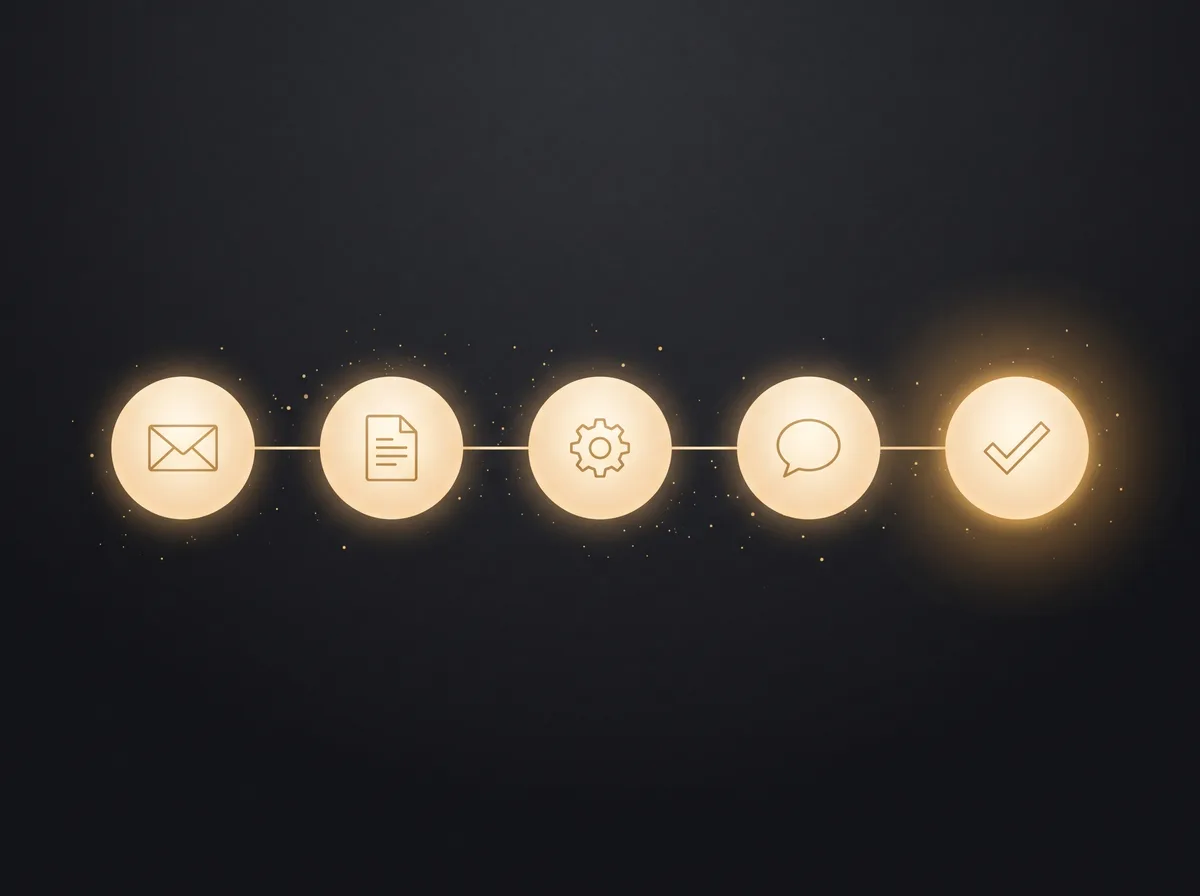
What can really be automated
The order follows the ratio of benefit to setup effort. If you only implement the first point, you are already ahead of most businesses in your district.
-
Reaction to inquiries: lead, notification, automatic reply
The most important process. Small businesses lose customers not because of bad advertising but because the reply to an inquiry takes two days. Instant notification plus an automatic “we are on it” close that gap.
-
Reports and dashboard
Instead of collecting numbers from Google Ads, GA4 and Meta by hand once a month, a dashboard is set up once and updates itself. You open a link and see the real picture, any time. That saves hours and replaces gut feeling with data.
-
Collecting reviews
After a job is done, a polite request for a review on the Google Business Profile goes out automatically. Reviews are the trust currency for local businesses in Vienna, and almost nobody manages to ask for them regularly by hand. How the profile needs to be set up for that: Google Business Profile Vienna: set up in 30 minutes.
-
Follow-ups and reminders
If the customer has not replied to the first message, a gentle reminder goes out after a few days. If there is an appointment tomorrow, the customer gets a reminder so nobody forgets to show up. Simple chains that raise the close rate without a single new customer.
-
Content drafts, with a human behind them
AI tools quickly deliver a first draft for a post, a service description, the answer to a frequent question. It stays a draft, not a publication: afterwards someone brings in the brand’s voice and the facts. What gets automated is productivity, not judgement.
-
Rules in Google Ads
Google Ads lets you set automatic rules: pause an ad when the cost per inquiry exceeds a threshold, adjust bids on a schedule, alert when a campaign stalls. That is not autopilot instead of a specialist but insurance against burned budget between two checks. More on the Google Ads Vienna page.
What you should not automate
The honest part that is missing from tool advertising.
Automate or not
Better not
Gladly
The rule behind it: automate the recurring and predictable. Decisions and trust stay with a human.
Where to start without drowning in tools
The most common mistake: buying ten fashionable tools and abandoning them after two weeks. It works the other way round.
Four steps
Write it down
Every workflow you do by hand every week.
Pick one
The one that eats the most time or loses customers. Usually: the reaction to inquiries.
Build it to the end
Only that one, until it runs reliably. Process first, then the tool for it.
Then the next
One finished flow is worth more than five half-configured ones.
What it really delivers, without miracle promises
Honestly: automation on its own brings no new customers. It does not replace advertising and offer. It does two things: it gives you hours back, and it stops you losing what is already there. Inquiries that leaked away because of a slow reply. Reviews nobody asked for. Budget burned between two checks.
For a Viennese SME that usually means: less routine in the evening, a higher share of inquiries that make it to a conversation, and a clear picture of the numbers instead of guesses. No magic, but exactly the difference that gets you more from the same budget. What an inquiry costs in your industry: the lead cost calculator.
When a specialist pays off
Much of the list above can be set up yourself over a weekend. You need a specialist when several processes come together and get in each other’s way, when tracking and analytics have to be clean so that automation does not optimise blindly, or when the whole thing should be connected to advertising so that it pays into inquiries and does not just “look automated”. How I set that up for businesses in Vienna is on the AI freelancer Vienna page; the wider view on AI tools is in 9 AI marketing tools for small business in Vienna.
Frequently asked questions about marketing automation
Do I need a CRM for this?
Not at the start. A well-kept spreadsheet is enough for the first processes. A CRM pays off once several people work with inquiries or the follow-up chains get longer.
Which tools are the right ones?
The ones that connect to what you already use: website form, email, WhatsApp, Google accounts. The tool is secondary. First the workflow is described, then the fitting tool is chosen, not the other way round.
Is this compatible with GDPR?
Yes, as long as you only write to people who gave you their data themselves, and every automatic message has a clear sender and an unsubscribe option. Mass mailing to bought lists is not automation but a legal problem.
How long does the setup take?
A single process such as the reaction to inquiries is set up and tested in a day. A dashboard takes one to three days depending on the data sources. After that it runs without maintenance.
What does it cost?
Done yourself: the tool fees, usually under €50 a month. With a specialist: a one-off per process, in my case from €900; prices are on the AI freelancer Vienna page.
Want to know what should be automated first in your marketing and what you are better off leaving alone? In a free intro call I tell you honestly where automation works and where it is just a fashionable tool.
FREE INTRO CALL